


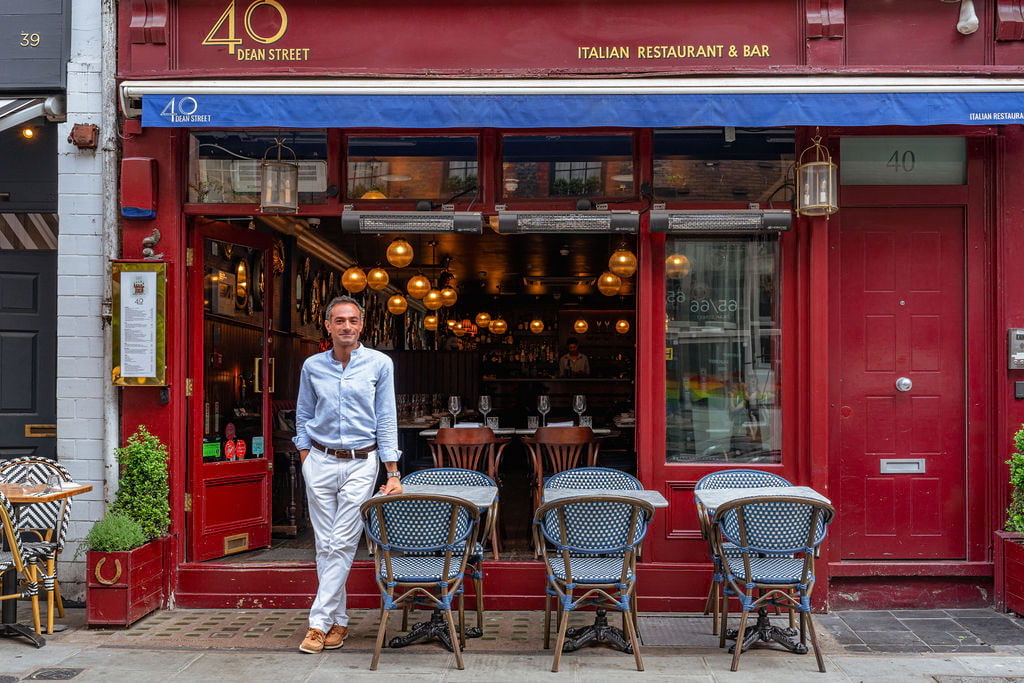

In a neighbourhood where restaurants open, close and change direction at a moment's notice, sticking around tends to mean something. For Nima Safaei, growth has never been about chasing buzz or expanding for the sake of it. What started at 40 Dean Street only grew when demand and a loyal crowd of regulars made it hard not to.
Today, alongside 64 and 27 Old Compton Street, his trio of Soho restaurants share a common theme: proper comforting food, genuinely personal hospitality, and a strong connection to the streets they call home. We sat down with Safaei to talk about growth, trust, and why making people feel at home still matters in London dining.
1. What inspired you to expand beyond 40 Dean Street and open at 64 and 27 Old Compton Street?
40 Dean Street has always been my heart, but after years of guests telling us they couldn't get a table, it felt like the right moment to grow. Soho has always felt like home to me, so continuing that journey here felt natural. Opening at 64 and then 27 Old Compton Street wasn't about becoming bigger; it was about creating more spaces where people could feel at home. Each site is an extension of the hospitality and food we've always cared deeply about.
2. How do you make sure each restaurant has its own personality while still feeling part of the same family?
I always say that a restaurant should feel like the team that runs it. So while our approach to hospitality stays focused on being warm and a home away from home, each site has its own rhythm. 40 Dean Street is the original, romantic and cosy; 64 is a little louder, a bit more playful; and 27 has that classic, fast-paced tavola calda spirit. At their foundations, they share the same ethos, but each brings it to life in its own way.
3. What's one thing you've learned from running multiple sites that you wish you'd known earlier?
That you can't do everything yourself, and you shouldn't try to. I used to believe I had to be present for every tiny detail, but the real magic happens when you build a team you can trust. Letting people grow into roles, take ownership, and put their own personality into the experience has made all the difference.
4. How does the Soho neighbourhood influence the way you design your menus?
Soho demands food with personality. People come here expecting flavour, comfort and a bit of theatre. Our menus always start with classic Italian dishes, but we keep them flexible because the neighbourhood moves fast. If we see something resonating – whether it's a lighter dish for the summer crowd or indulgent plates for winter nights – we adapt. Soho keeps us creative.
5. Which dish across all your restaurants feels the most “you”?
That's a hard one, as I love every dish on each menu! If I had to choose, I'd say it's between the pappardelle with beef and tomato ragù at Forty Dean Street and the pumpkin ravioli with sage butter, Parmesan and amaretto at 27 Old Compton Street.
You can tell a lot about an Italian restaurant from its ragù – the deeper the flavour and the more tender the texture, the better. And the pumpkin ravioli at 27 shows how we're able to take the simplest of dishes and build complex, memorable flavours.
6. What's a key moment with a customer that still makes you smile?
There was a couple who got engaged at 40 Dean Street years ago, and every anniversary, they come back to the exact same table, which is very sweet to see. In fact, just being a part of the milestones in people's lives unfold in our restaurants – birthdays, first dates, celebrations, even the odd argument followed by a make-up dessert – reminds me why hospitality matters.
7. Where are your favourite places to dine in London and why?
I adore Bob Bob Ricard – an excellent restaurant where you always know you'll get an incredible dining experience. My fail-safe meal there is prawn cocktail to start, the beef Wellington for two and then the tarte tatin to finish – sublime. Barrafina is also a brilliant spot when I want something vibrant and full of energy.
8. What excites you most about the future of your restaurants in Soho?
Soho never stops reinventing itself, and I love being part of that evolution. What excites me most is continuing to create restaurants that feel like anchors in a neighbourhood that's always shifting; places where people return year after year, where the hospitality feels familiar even when everything else around you changes.
9. How do you keep your restaurants feeling fresh in such a competitive neighbourhood?
For me, freshness isn't about chasing trends; it's about staying connected to our guests. Their experience is paramount, and making sure they feel genuinely cared for is what keeps us at the forefront of their minds. The moment you stop listening to your guests is the moment a restaurant loses its soul.
10. And finally, should we expect any new openings on the horizon?
I'll never say never. If the right space comes along, I'm always tempted. But for now, the focus is on giving even more love to the restaurants we have. They deserve it, and so do the people who dine with us.