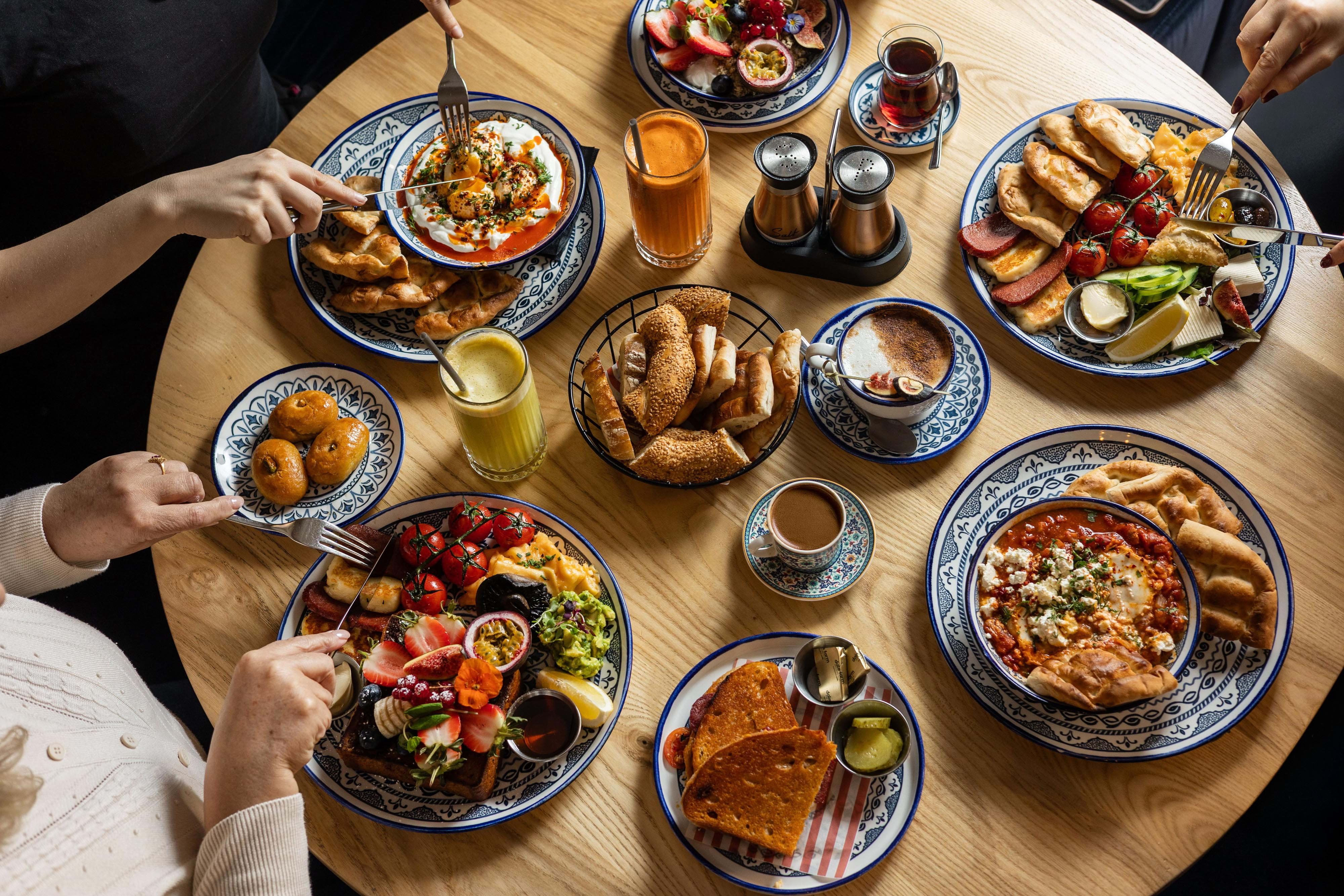


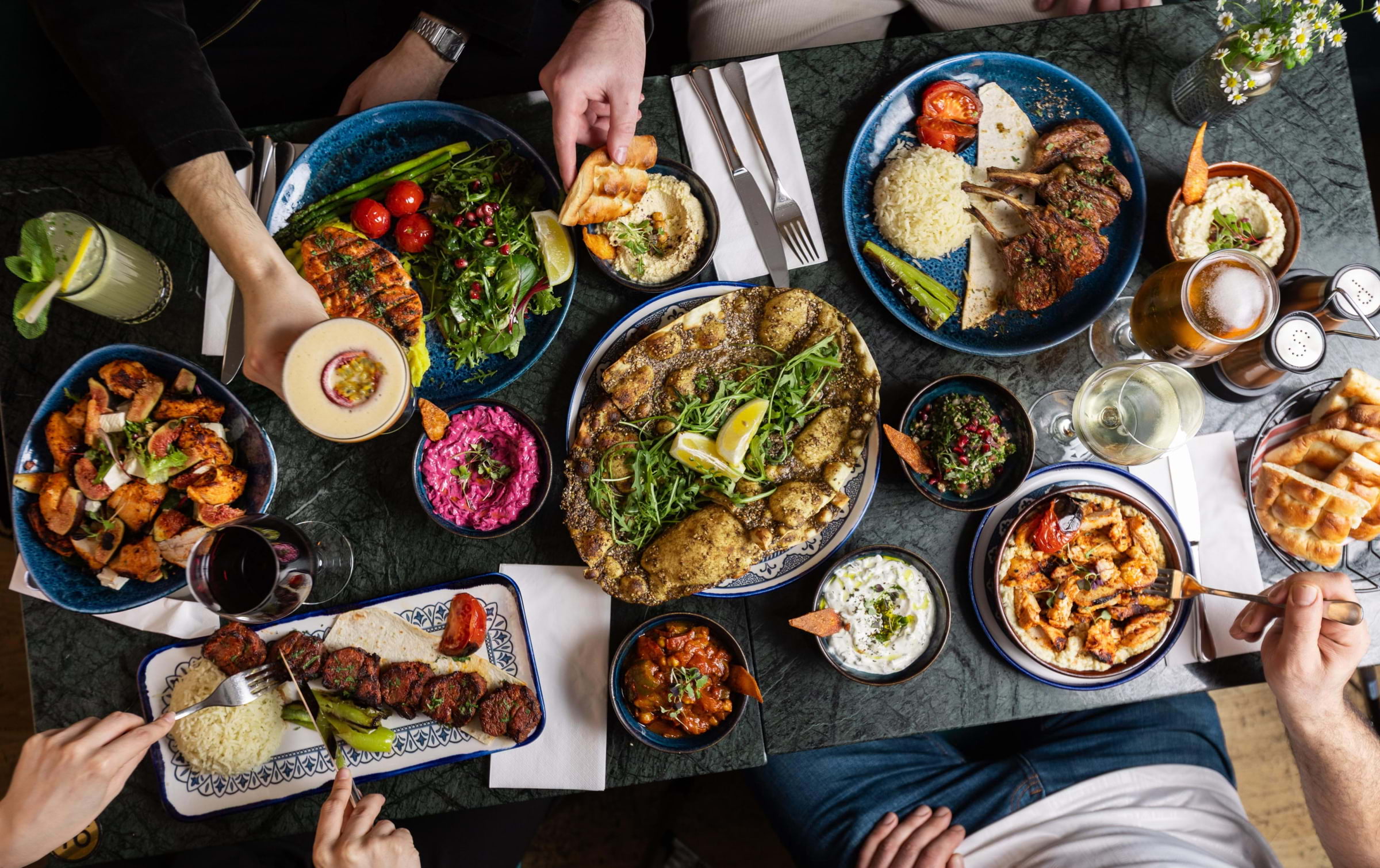

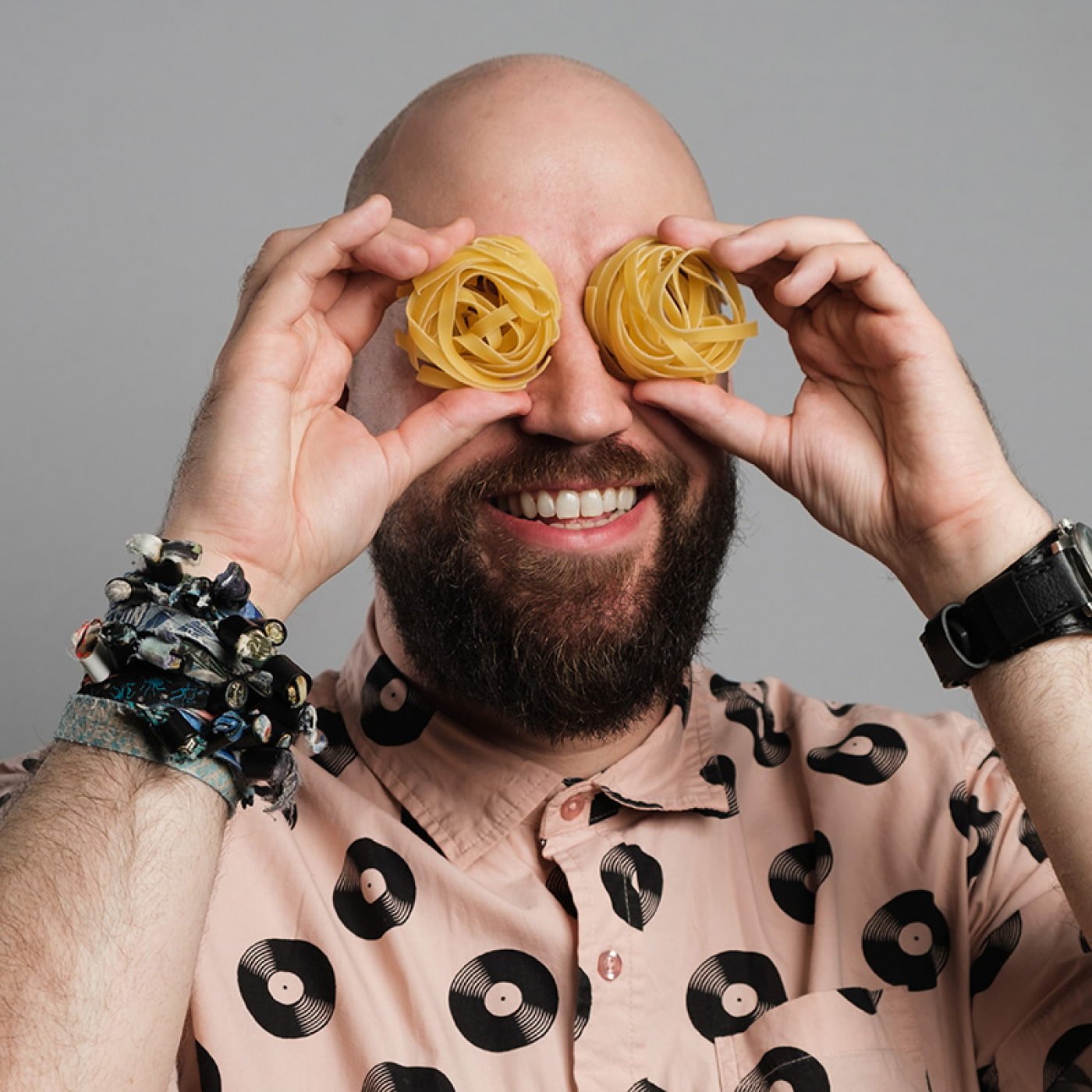
Fig & Walnut, Pitted Olive, and Sandwich Street Kitchen are a trio of unassuming eateries forming a triangle of tasty Turkish food at the heart of Bloomsbury. Each venue puts its own spin on things – a brunch café, a deli, a proper dine-in restaurant – but they're run by the same family. Over cups of creamy Turkish sahlep, we chatted with the genial husband-and-wife duo behind it all, Ismail and Fatma, to garner some insight into what it takes to enter, survive, and thrive in the hospitality business for as long as they have.
Q: Let's start at the beginning. How did you end up running three restaurants in North London?
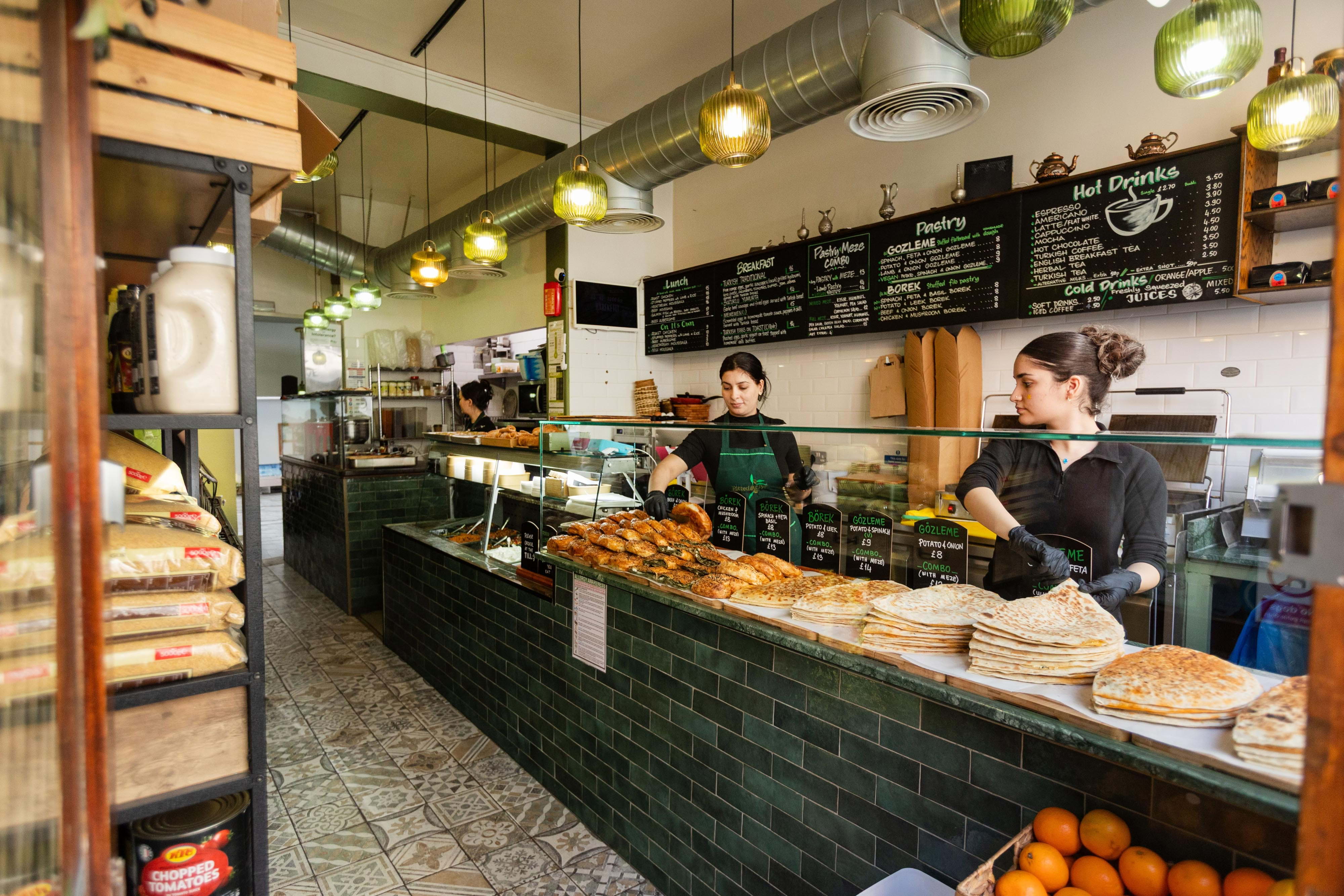
It's always been a family business. Ismail originally had a small off-licence near Arsenal stadium on Holloway Road, but food was always our real passion. After selling that shop, he opened Pitted Olive in what used to be an internet café. It began with coffee and deli food, then gradually introduced traditional Turkish street dishes — the kind we cook at home.
Every few months someone in the family would add another dish, and over time the menu evolved into what it is today. We've been there 14 years now. Food has always been part of who we are.
That's also how we met — Fatma used to come in for tea while she was studying nearby. Tea done the job, mate.
Q: What made you open a larger Turkish restaurant like Fig & Walnut?
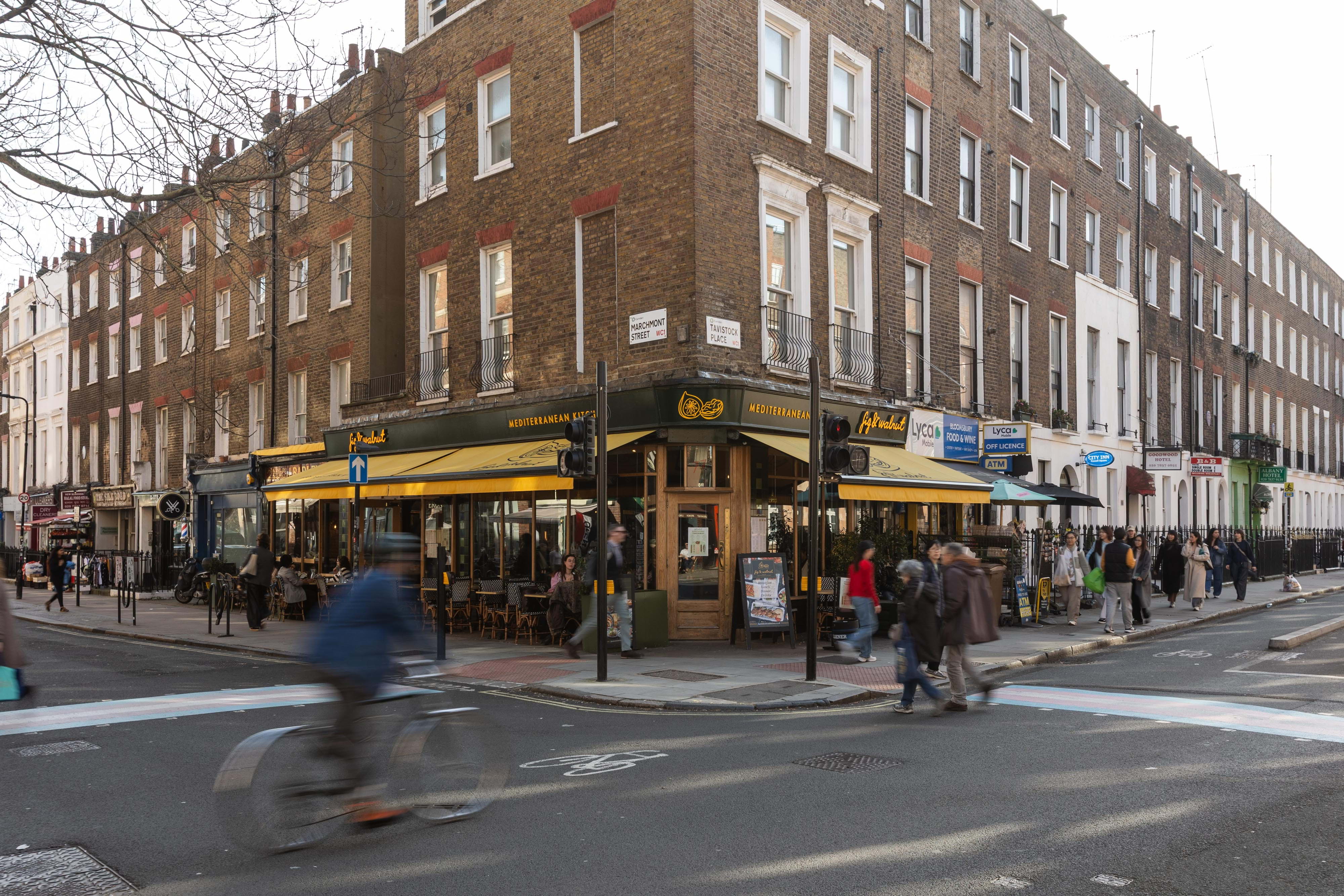
The idea was always in Ismail's mind. When you look at a new site, the first thing you have to ask is: what does this area actually need? If there are already five cafés, it doesn't need a sixth. But if there's a gap — that's your opportunity. In this area, there wasn't a proper Turkish restaurant. We had a small Turkish café, but nothing full-scale. So we thought, why not bring that here?
We took over this site after it had been closed for three years. We rebuilt everything from scratch and spent months perfecting the food. For us, quality is non-negotiable. We know where the meat comes from, we know the suppliers, we set the standards ourselves. It's hard work, but we enjoy it. Every day brings a challenge — and we like that.
Q: How does Sandwich Street Kitchen fit into the picture?
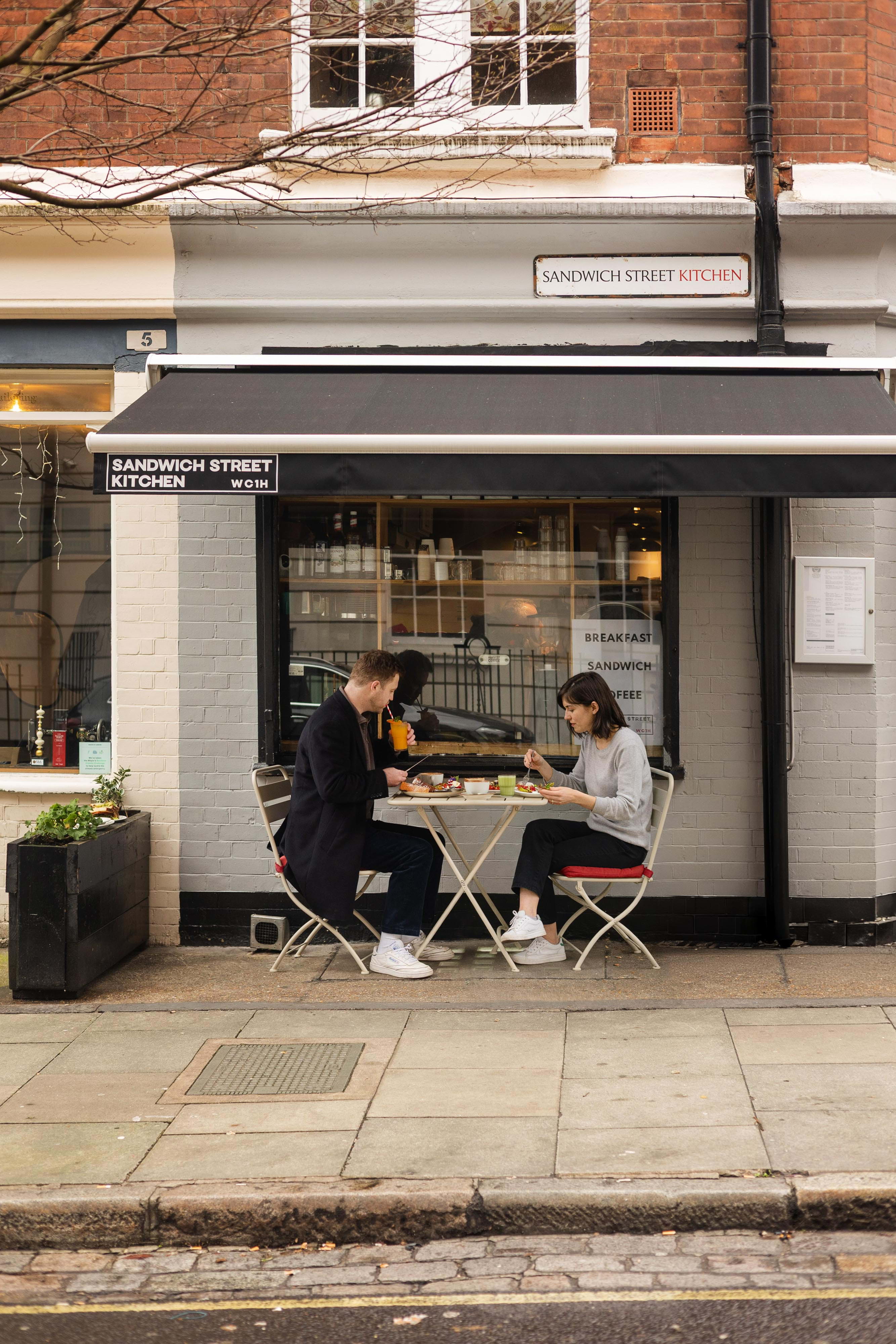
Ismail actually tried to buy it before Pitted Olive. It had been a sandwich bar for nearly 100 years, run by an elderly Italian gentleman. At first, he didn't want to sell. A year later, he approached him because he wanted to retire. We renovated it and ran it as a traditional breakfast spot. More recently, Ismail's younger brother has taken it on and evolved it into a stronger brunch concept with healthier options. It's doing very well — we get international visitors coming specifically for breakfast.
Q: Based on your experience, what advice would you give someone thinking of opening a restaurant?
First, study the area. Understand your customer base and what's missing locally. Don't just open something because you like the idea — make sure the neighbourhood actually needs it.
Second, be patient and genuinely love what you're doing. The first six months can be exciting and busy, but then reality hits. You need stamina. You need to care about the cleaning, the staff management, the suppliers, the systems. It's not just cooking.
Financially, our biggest advice is: don't spend all your money. If you can afford 100 seats, open 50. Keep half your funds as backup. You need to survive a full year — wages, suppliers, bills. If you go too big too quickly and trade slows, you'll be forced to cut quality. And once you cut quality, you're in trouble.
Start smaller, solid, sustainable. Grow from strength, not pressure.
Q: Considering your businesses go from brunch café to proper restaurant, which do you prefer running, smaller places or bigger venues?
It's not about size — it's about profit margin and sustainability. Some small cafés are more profitable than big restaurants with huge overheads.
With Pitted Olive, we've been cooking the same food for 14 years, refining and improving it while keeping standards high. A big restaurant can generate more revenue, but the workload is intense. Sometimes you ask yourself if it's worth it when a smaller concept can be more efficient.
Also, today's customers are very informed. Social media has raised expectations. People travel more, they know good food, they compare everything. So whatever you do, it has to be real, fresh, and properly executed.
Q: You've been part of the local fabric for years now. How important is community to you?
It's everything. Bloomsbury feels like a village inside central London. You're close to King's Cross and Euston, but you have the squares, the greenery, the universities, long-time residents, tourists. People come back years later and say, “You're still here. The food tastes the same.” That's comforting. That consistency matters. This street is full of independent, family-run businesses — there's a warmth here. It feels good.
Q: Would you expand further?
Maybe one day. Pitted Olive could easily become a franchise. But expansion requires energy and commitment. For now, we prefer staying strong as a family business in this area.
If we ever expand, it will stay within the family. But timing and mindset matter.
Q: Speaking of family, what's it like working with someone that close to you?
We all have different strengths. Ismail is very creative and a people person. Fatma is more operational — she focuses on systems and making sure everything runs smoothly. We trust each other's judgement. It's not about one person being the boss. It's about balance. We cover different areas, and that's why it works.
Q: Hospitality has been tough recently. How are you navigating it?
It's challenging — rising costs, business rates, taxes. Growth across the country has slowed. Many restaurants are making more from takeaway than dine-in, and high streets lose energy when that happens.
But we've been in this industry long enough to see both the worst and the best. Experience teaches you how to adjust. You learn how to maintain stability during tough times. At the end of the day, without passion, the business fades. With passion, you adapt.
Q: Finally, what would you personally order from your restaurants?
Honestly? We'd eat everything. If it's coming out of our kitchen, we're happy.