


Sumo Takes Center Stage at the Royal Albert Hall

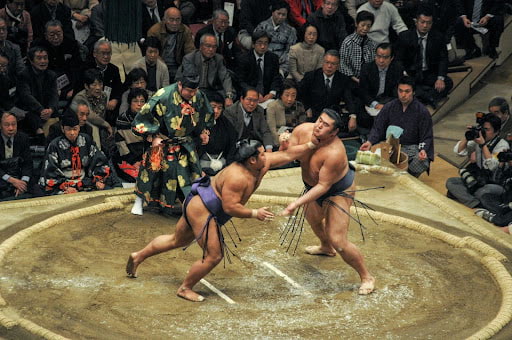
The Royal Albert Hall has seen its fair share of spectacular performances, but none as spectacular as this one. In October 2025, the legendary stadium became a Japanese relic of ancient Japanese history. During five memorable days, the 15th to 19th, the Grand Sumo Tournament invited over 40 best maku-uchi rikishi-elite sumo wrestlers, to London. The circular platform was transformed into a holy dohyo of clay and sand that had a roof resembling the Shinto shrine. Under the sparkling dome, the tradition and spectacle had clashed in a manner that few sports will ever emulate.
The air felt charged. The matches started almost in complete silence, with the sole exception of purification by spreading salt. In its turn came the thunder, two huge men sliding together, feet scraping, muscles stretched to the limit. The game followed a few rules: kick your opponent out of the 4.55-meter ring or any part of his or her body to be in contact with the ground except for the soles of his or her feet. In that simplicity, however, there was great discipline. No punching or kicking, just accuracy, timing, and instinct. Years of training were shown in a couple of seconds of fighting.
The pomp was as good as the battle. The wrestlers came into the ring with brightly coloured silk aprons with gold and family patterns. The rituals were undertaken by priests. The crowd, which had been a combination of Londoners and Japanese visitors, stood on end as the ceremony clashed with the contest. Sumo is well-suited in a city that embraces tradition.
Something magnetic was in it, the rhythm, the respect, the weight of history. It was not too hard to understand why fans walked out of the hall in a state of motion, even though people did not previously pay attention to the sport. And it brought some familiar feelings to some, particularly to those who are attracted to contention and time. It is there that the connection commences. The emphasis, the expectation, the explosive burst of force, all this seemed curiously familiar to another game which Britain is so familiar with.
It has a sort of rhythm to tie the two worlds together, the surge of motion, the pause before action, the accuracy that makes the difference between victory and a setback. A sumo wrestler reads like a jockey reads a stride in a horse, and both are dependent on the instinct developed by constant practice. It’s no surprise that fans who follow horse racing tips find something familiar in sumo’s balance of timing, strength, and calm under pressure.
The sumo dohyo and the racetrack share that tight, controlled chaos where fractions of a second matter. A wrestler’s well-timed throw isn’t so different from a rider weaving through the pack, judging when to make the break. Every movement counts. Both rely on intuition built through repetition, on knowing when to stay calm and when to go for it.
The specialty of the Royal Albert Hall event was that it was a combination of two cultural worlds that perceive rhythm, ritual, and spectacle. The Japanese wrestlers knelt in obedience to fight, and the British audience cheered with a faint reverence. It had nothing to do with strength, but rather with poise and control. To racing fans, it was a reminder that grace and grit usually go to the same race.